Email:nkdxb@imust.edu.cn
©Editorial Department of Journal of inner Mongolia University of Science & Technology

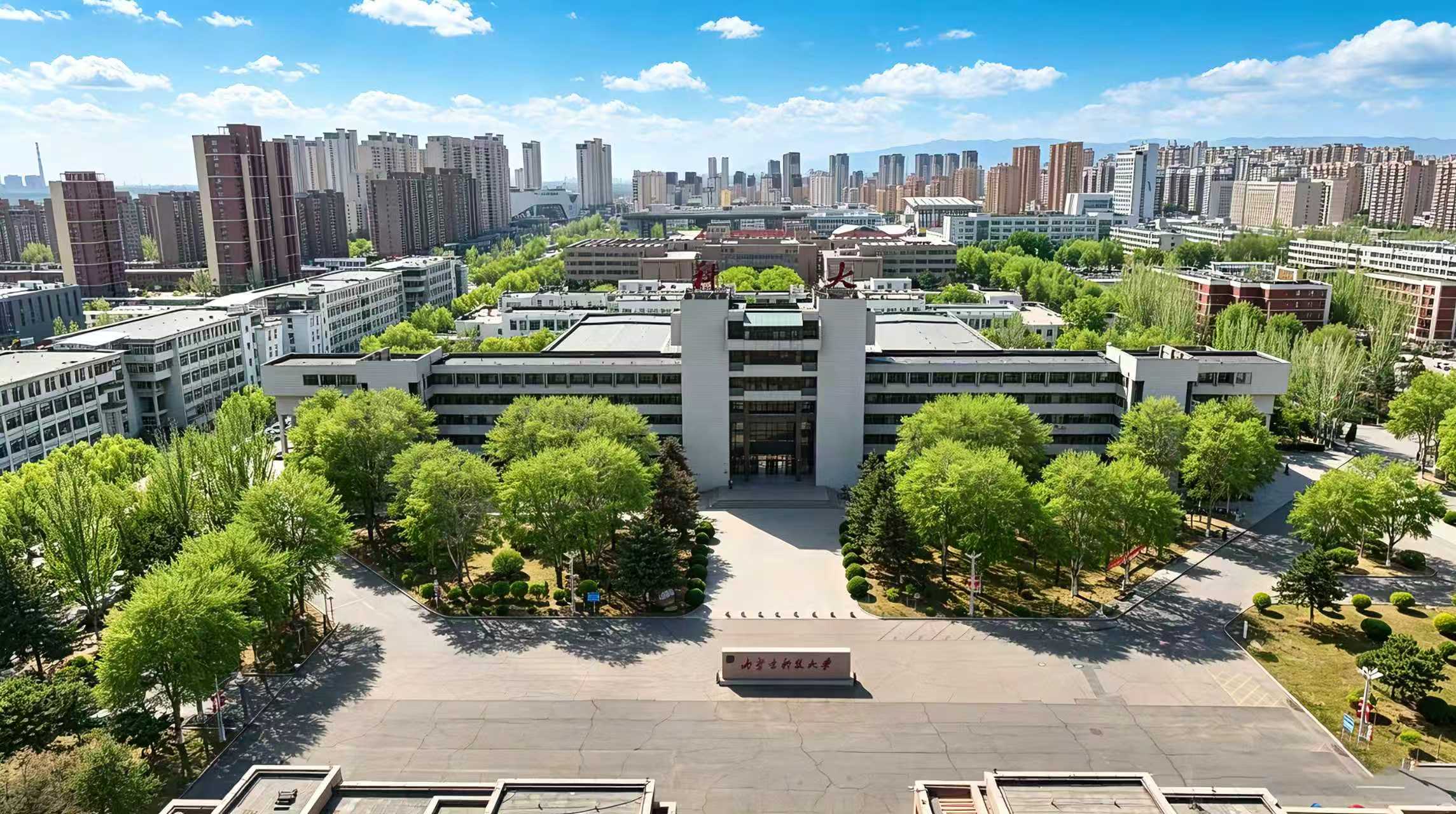
To strengthen academic integrity and standardize the submission, review, and publication processes, and to combat academic misconduct, theJournal of Inner Mongolia University of Science & Technologyadheres to recognized publishing ethics norms. The editors, authors, and reviewers of this journal should fulfill the following responsibilities:
1. Responsibilities of Editors
1) Editors should handle every manuscript fairly and impartially, making decisions to accept or reject based on the scope of the journal, the novelty, and academic value of the manuscript. They should promptly register manuscripts that pass the initial review, send them for review, and edit and publish those that pass the final review.
2) During the editing and publishing process, editors should adhere to publishing standards while respecting the author's viewpoints and writing style. Any key modifications to academic content must be agreed upon by the author.
3) Strictly implement the “three reviews and three proofreads” system, using a single-blind peer review system and maintaining authentic review records. Editors have the obligation to maintain confidentiality regarding information about authors and reviewers, the research results of authors, and intermediate materials related to the handling of manuscripts.
2. Responsibilities of Authors
1) Authors must not submit identical manuscripts to more than one journal simultaneously nor publish manuscripts describing the same research results in multiple journals.
2) Manuscripts should comply with the relevant requirements stated in the “Submission Guidelines” of this journal.Authorsmust ensure the manuscript is an original work free from plagiarism, data fabrication, or other forms of academic misconduct, and does not contain any confidential information. Authors should confirm all sources of data used in the research and properly cite and acknowledge any scholarly work referred to in the text.
3) All named authors must meet the criteria for authorship as required by the journal and should not be added or removed arbitrarily.
4) Clearly state any funding information relevant to the study in the manuscript and avoid mentioning unrelated funding sources.
5) Authors should respect the reviewers’ comments. If there are disagreements with the reviewers’ comments or the editorial decision, they can submit a written appealtothe editorial office, providing detailed explanations for each point of contention.
6)Authors shall proactively disclose to the Editorial Office any actual or potential conflicts of interest that may affect the objectivity of the research findings.
3. Responsibilities of Reviewers
1) Reviewers should complete the review of the manuscript in a timely manner as agreed; if unable to do so, they should promptly inform the editorial office and return the manuscript.
2) Reviews must be objective, fair, scientific, and accurate, expressing opinions through evidence-based arguments.
3) Reviewers must maintain confidentiality regarding the contents of the manuscript and refrain from unauthorized use of the author’s research results.
4) Reviewers should verify the sources of all data and figures in the manuscript and inform the editor if they detect plagiarism or multiple submissions.
5) When there is a conflict of interest between the reviewer and the manuscript's author, the funding body, or other associated parties, the reviewer should actively recuse themselves from reviewing the manuscript.
4. Academic Misconduct Handling
The journal defines academic misconduct in manuscripts based on the latest national standard of the People's Republic of China, Academic Publishing Specification — Definition of Academic Misconduct for Journals (CY/T 174-2019), including plagiarism, forgery, tampering, inappropriate attribution, multiple submissions, duplicate publication, and violation of research ethics. The journal will seriously deal with papers with academic misconduct, hold the authors responsible, and purify the academic environment.
Manuscripts will be checked using the Academic Misconduct Literature Check (AMLC) system (http://check.cnki.net/amlc2/) at the preliminary review stage and before publication in order to eliminate academic misconduct.
If academic misconduct is detected in a manuscript at any review stage, the journal willwithdraw the manuscript.If the manuscript is found to have academic misconduct after publication, the journal will withdraw the manuscript and hold the author responsible in accordance with the relevant laws and regulations and the Copyright Transfer Agreement signed by the author. For serious cases (e.g. intentional multiple submissions), the journal will no longer accept the author's submissions.
5. Statement onResponsibleUse of Artificial Intelligence (AI) Tools
In order to maintain and ensure the originality, authenticity, and rigor of published scholarship, uphold academic integrity, advocate a good academic culture, and promote the construction of academic norms, theJournal of Inner Mongolia University of Science & Technologydeclares the following policies on the standardized use of AI tools, which are intended to provide greater transparency and guidance to authors, reviewers, editors, and readers:
(1) For authors
a. In principle, this journal does not accept any AI tools as authors of signed papers, while references should not contain papers that list AI as an author. Authors must be natural persons who can be held responsible for the authenticity, completeness, and scientificity of the paper's content.
b. If authors use generative AI and AI-assisted technologies in the writing process,their use must be limited to language editing intended to improve readability and linguistic quality. c. If AI tools have been used in preparing a submitted manuscript, the authors should indicate the use, including the name of the specific AI tool used, the scope and extent of the generated content, and the role and function of the AI in the creation of the paper, so that the reviewers and editorial office can judge the originality of the paper.
d. The submitting authors themselves should abide by academic ethics and academic integrity, and take full responsibility for the use of AI tools in their papers. If authors are found to have concealed or inaccurately disclosed their use of AI tools, the journal will treat this as a breach of academic integrity and reserves the right to reject the manuscript or retract the published article.
(2) For reviewers
a. Reviewers should not upload the submitted manuscript or any part of it to AI tools, as this may violate the confidentiality and proprietary rights of the authors and may violate data privacy if the paper contains personally identifiable information.
b. Reviewers of the journal are required to complete the review of the manuscript independently at all stages, and should not use AI or AI-assisted technologies to review the paper, and the reviewers should be responsible for the content of the review report.
c. If the reviewer believes that the manuscript may use AI tools, he/she should reflect this truthfully in the review comments so that the editorial office can further investigate the matter, and if the reviewer determines that the manuscript uses AI tools, he/she should state the reasons in the review comments.
(3) For editors
a. Editors may utilize AI for assisted editing, but should not use AI technology for the evaluation and decision-making process of the final manuscript.
b. The editorial office reserves the right to track and review the use of AI technology in the submission and publication of manuscripts over time, and if it is found that there is concealment or untruthful provision of the use of AI tools, as well as the existence of the above violations, thejournal will consider this a violation of academic integrity and reserves the right to reject or withdraw manuscripts.
6. Correction policy for published articles
The journal usually does not publish corrections or retractions to published articles. However, should it be necessary, the journal will issue corrections or retractions under the following circumstances. This policy applies to all articles published in the journal, including but not limited to research papers, review articles.
Correction statements are applicable in the following situations:
(1) Factual Errors: Such as data errors, figure/table errors, citation errors, etc.
(2) Textual Errors: Such as spelling mistakes, grammatical errors, unclear expressions, etc.
(3) Ethical Issues: Such as incorrect authorship, undeclared conflicts of interest, etc.
(4) Other Situations Requiring Clarification: Such as supplementary information, corrections to research methods, etc.
Correction Statement Process:
(1) Submission of Correction Requests
a. Author-Initiated: If authors identify errors in the article, they should submit a correction request by sending email to the editorial office, detailing the errors and proposed corrections.
b. Reader's Feedback: If readers identify errors in an article, they can submit correction suggestions by email, online feedback, etc.
c. Editorial Office's Discovery: If editors identify errors during routine review orpublicationprocesses, they will contact authors for corrections.
(2) Review and Evaluation
a. Upon receiving a correction request, the editorial office may invite external experts when necessary to conduct the assessment.
b. For correction requests involving academic misconduct, the editorial office will initiate a formal investigation and may involve external experts for evaluation.
(3) Publication of Correction Statements
a. Corrigendum: After confirmation by the editorial office, the author needs to submit the corrected manuscript and a correction statement. The correction statement will be publicly posted on the journal's website.
b. Erratum and Clarification: The editorial office publishes correction statements, identifies the incorrect content and the corrections, and provides further explanation of the article's content.
c. Retraction: After confirming serious issues with the article, the editorial office will issue a retraction statement.
The editorial office will consider retraction in the following situations:
(1) Academic Misconduct: Such as plagiarism, data fabrication, image manipulation, etc.
(2) Unverifiable Research Results: Such as non-reproducible experimental data.
(3) Authorship Disputes: Such as unauthorized use of others' work.
(4) Other Serious Breaches of Academic Integrity.
7. Appeal Mechanism
Authors may submit an appeal to the editorial office if they can provide sufficient information or evidence, such as new facts, corrected information, or supplementary materials, or if they wish to raise concerns about conflicts of interest, unfair peer review, or related matters. The editorial office will deal with the appeals according to the relevant information and evidence provided by the authors.
8. Advertising Policy
At the moment,Journal of Inner Mongolia University of Science & Technologydoes not publish advertising in any form. No advertisements appear in the print journal, on the journal’s official website, or on any other journal platform.
Email:nkdxb@imust.edu.cn
©Editorial Department of Journal of inner Mongolia University of Science & Technology